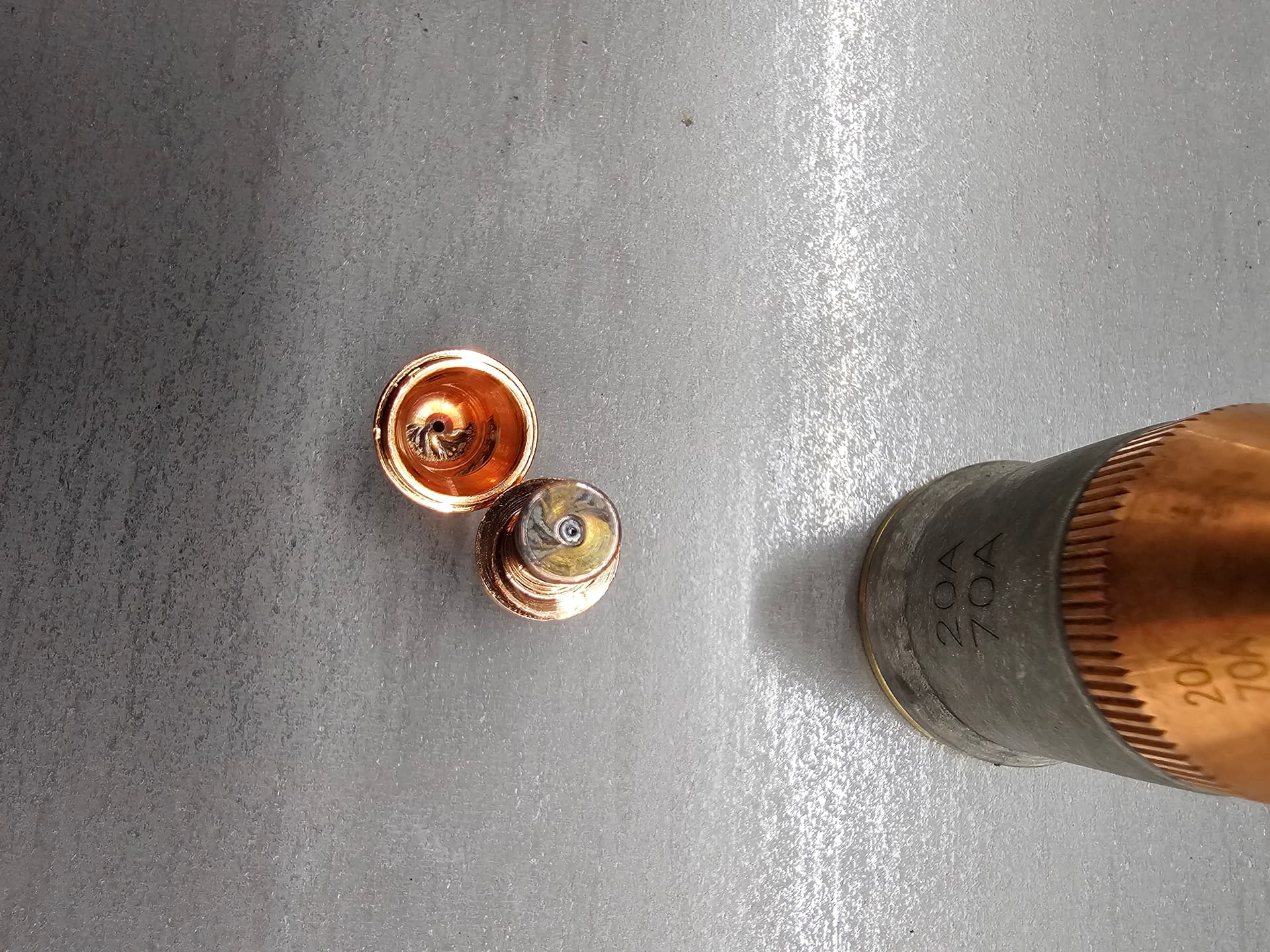
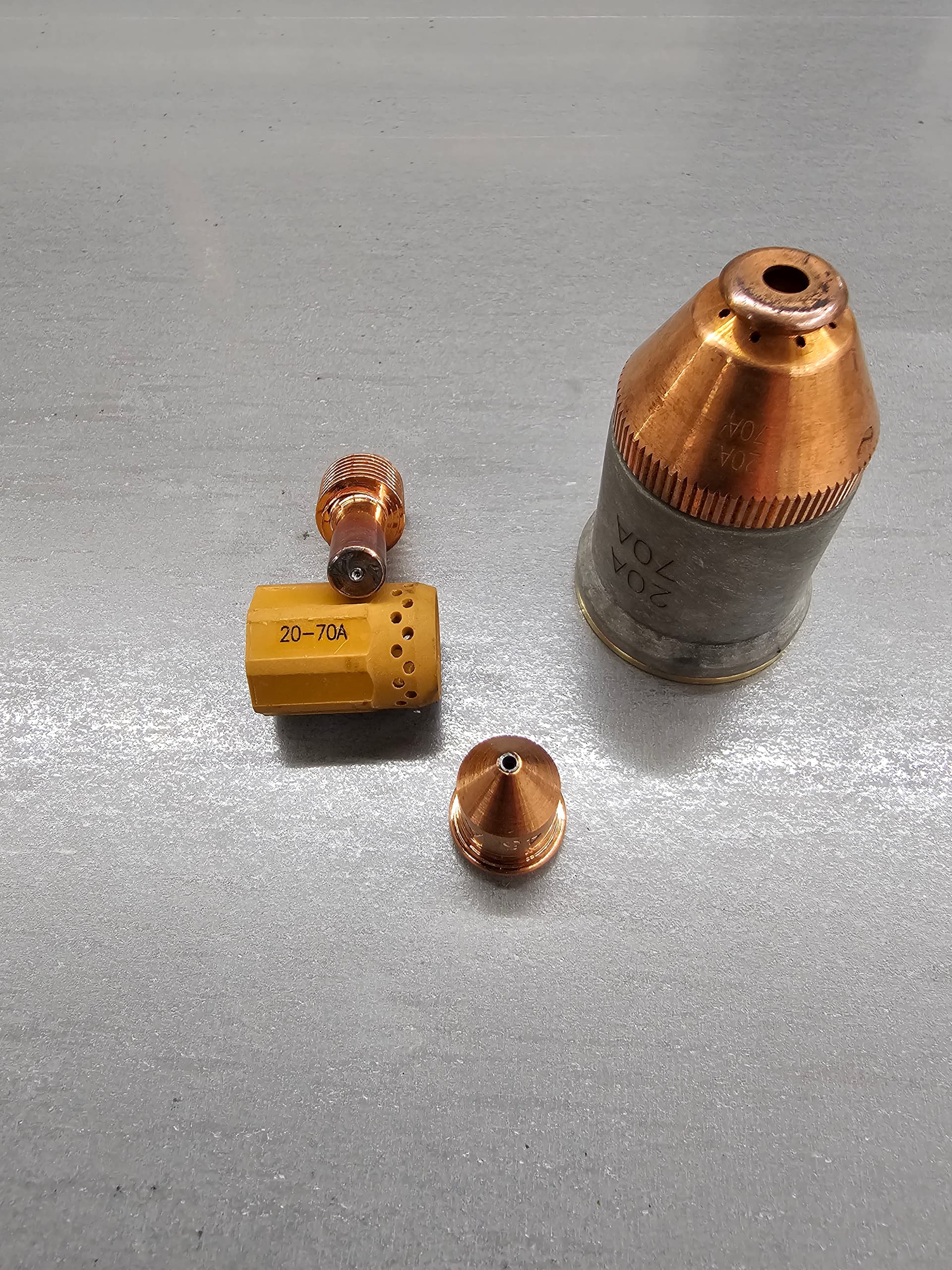
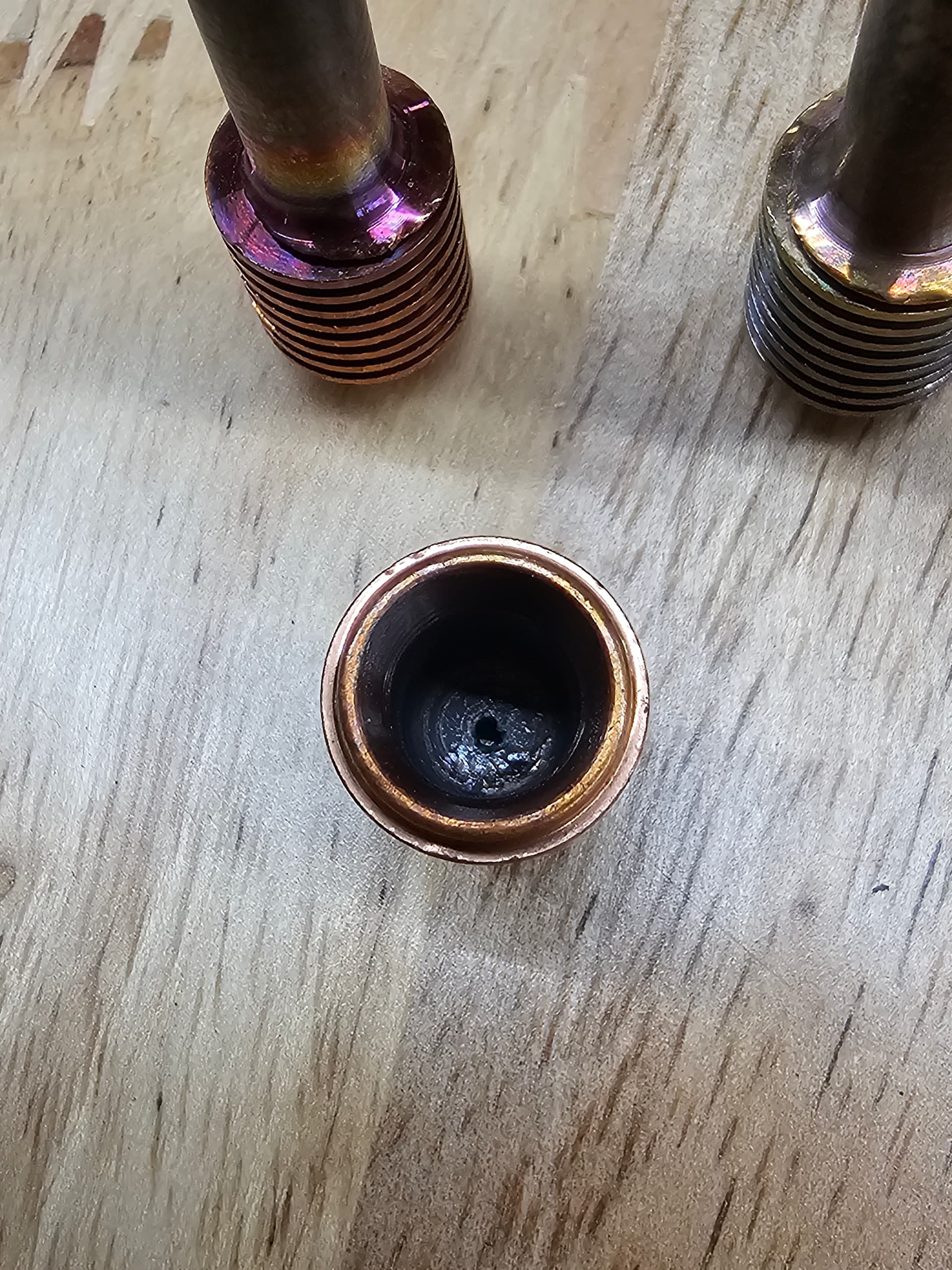
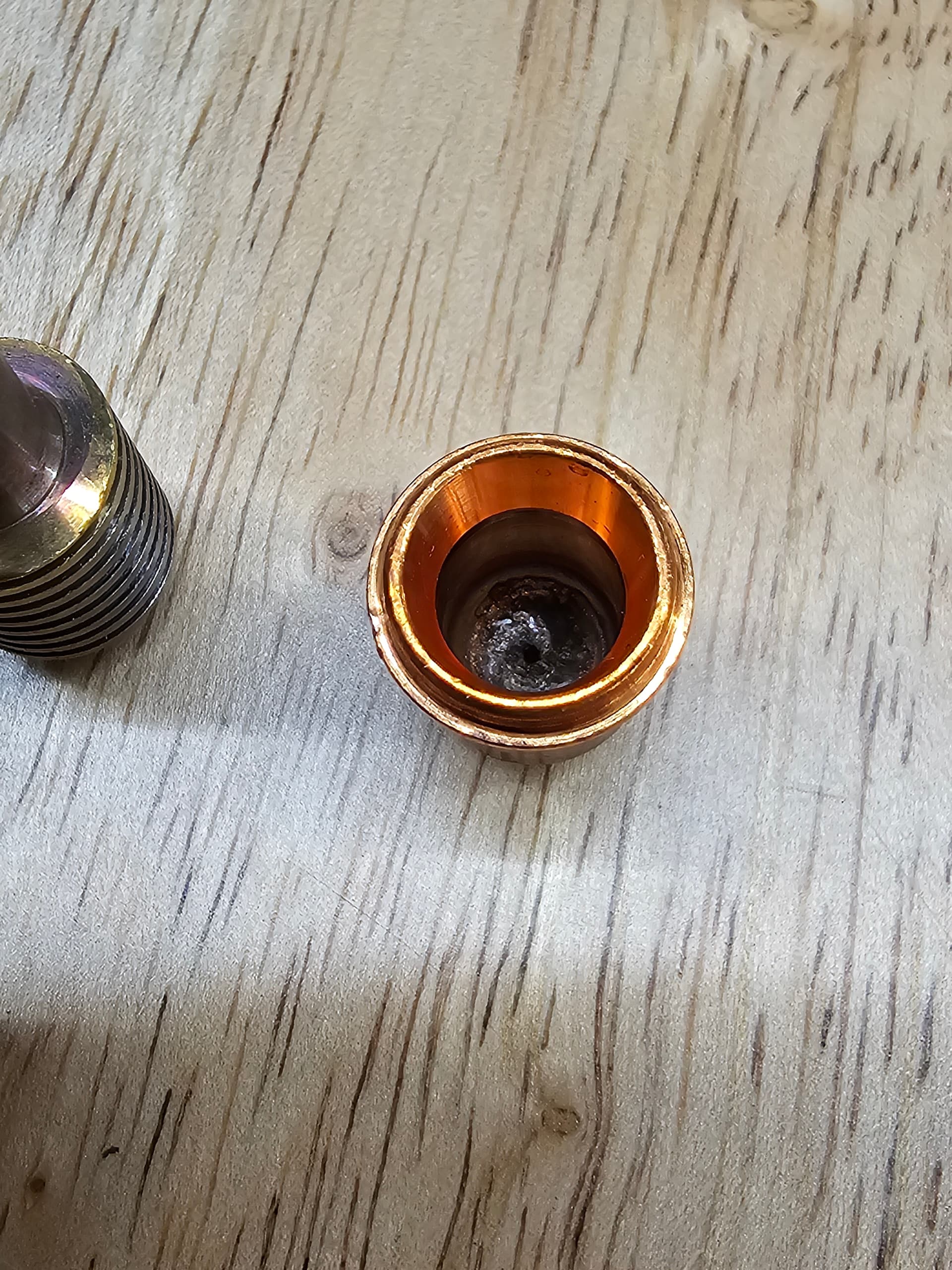
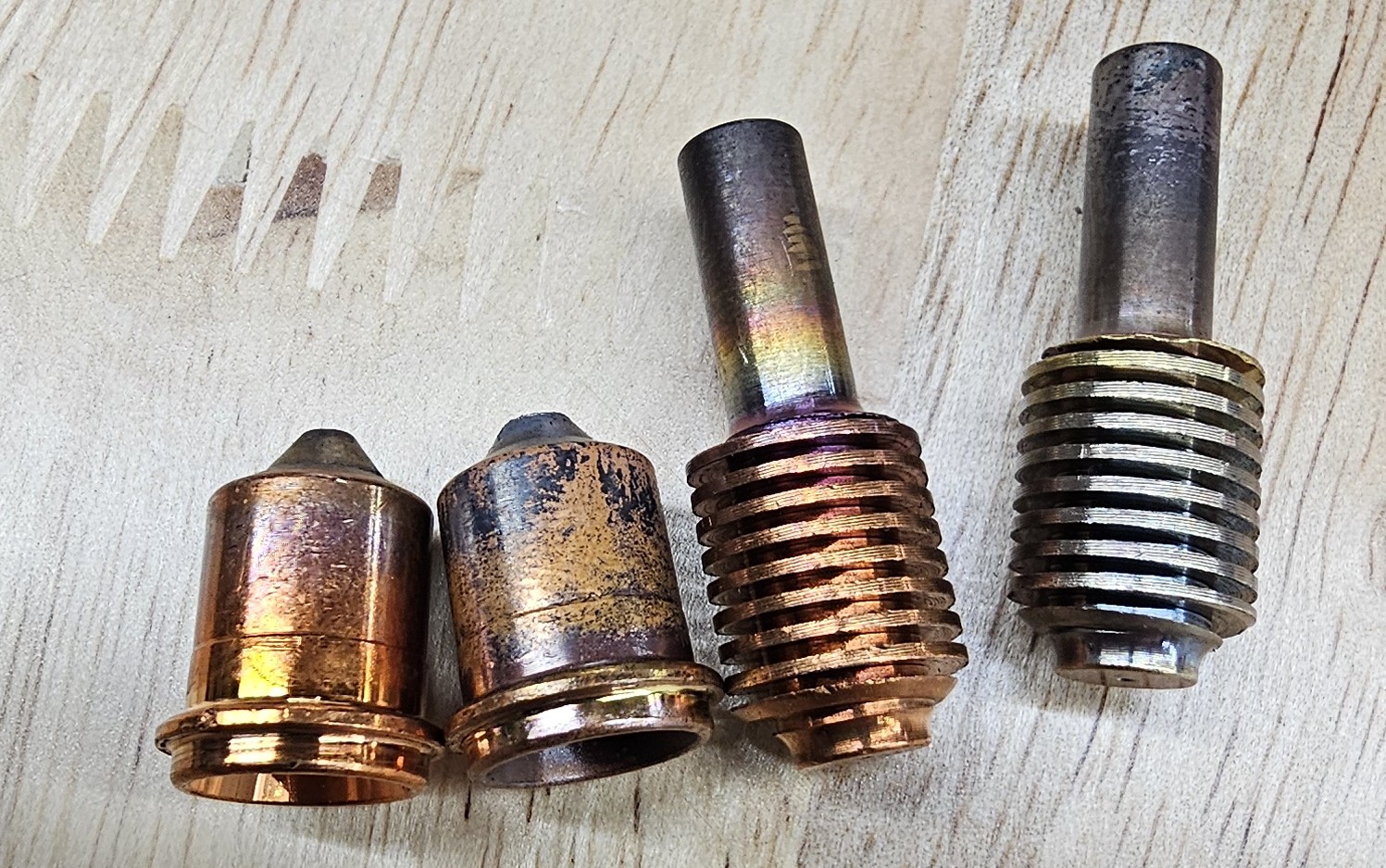
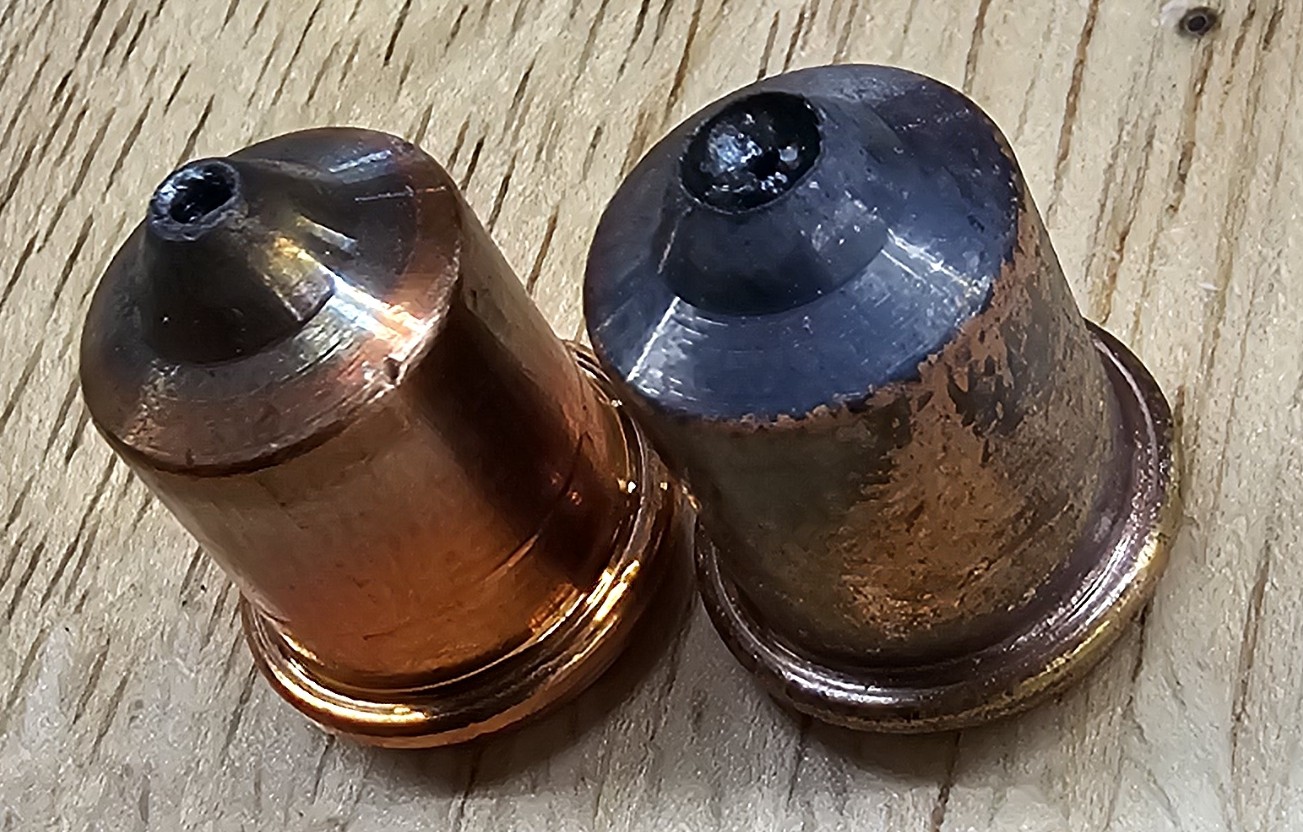
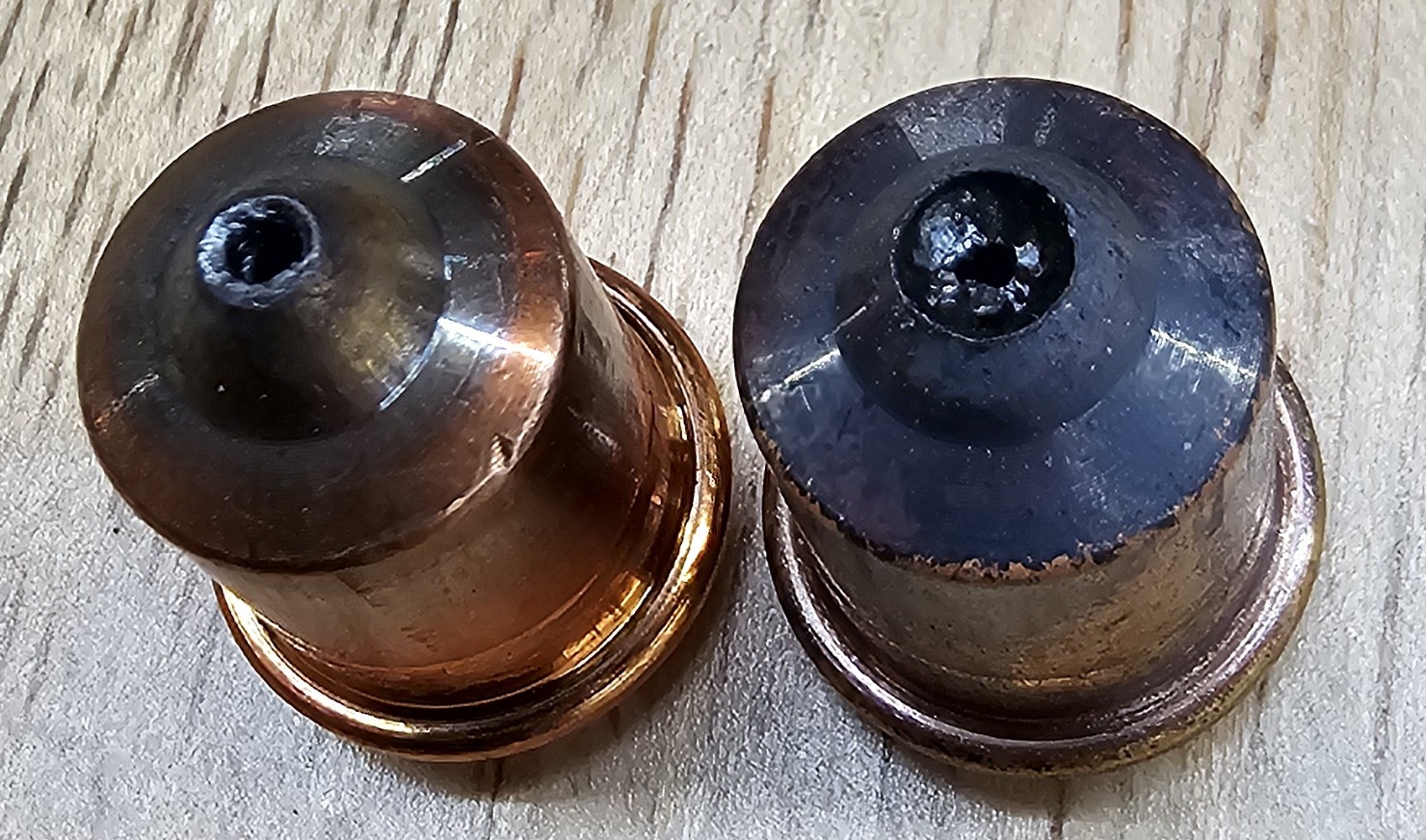
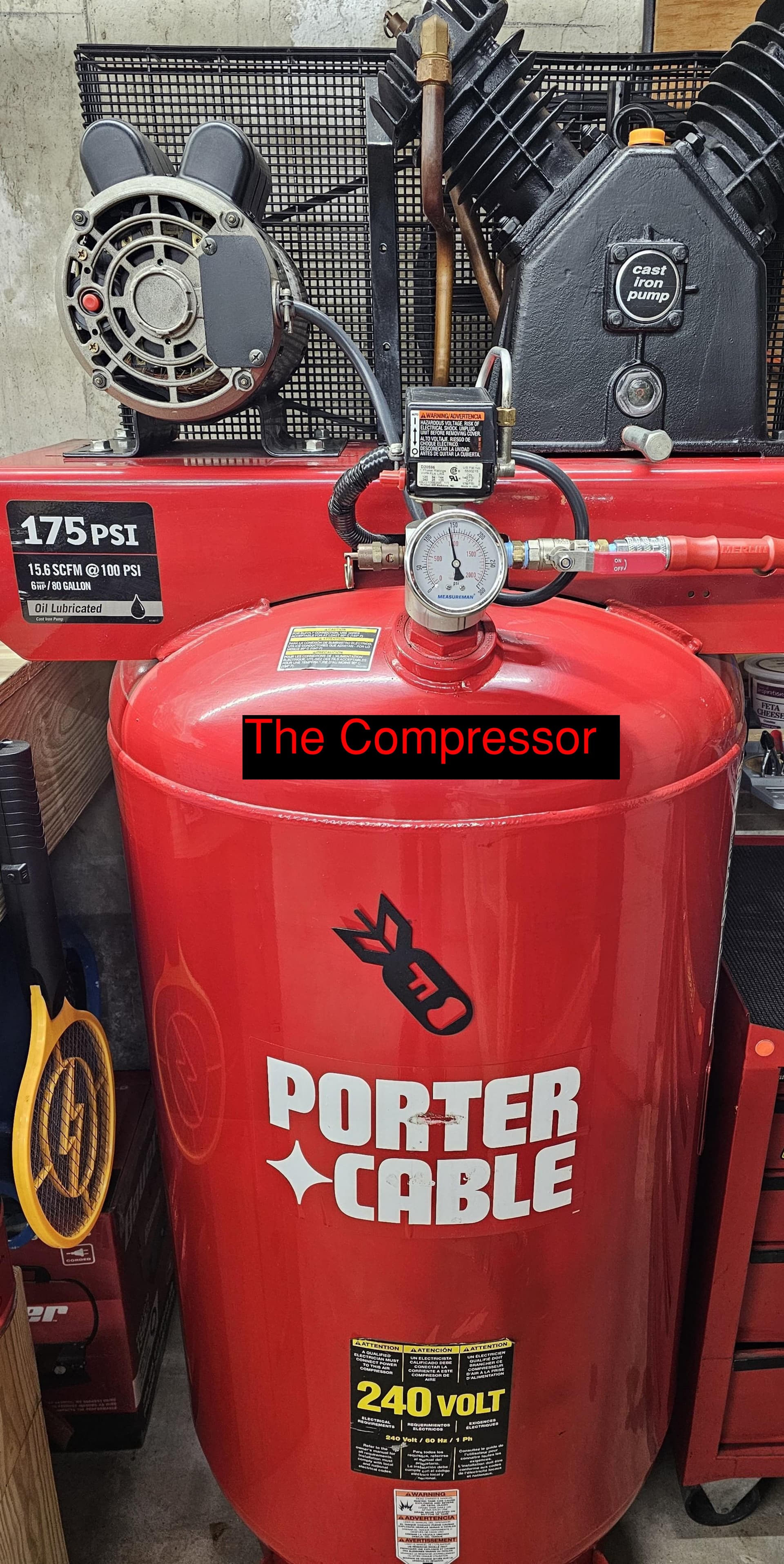
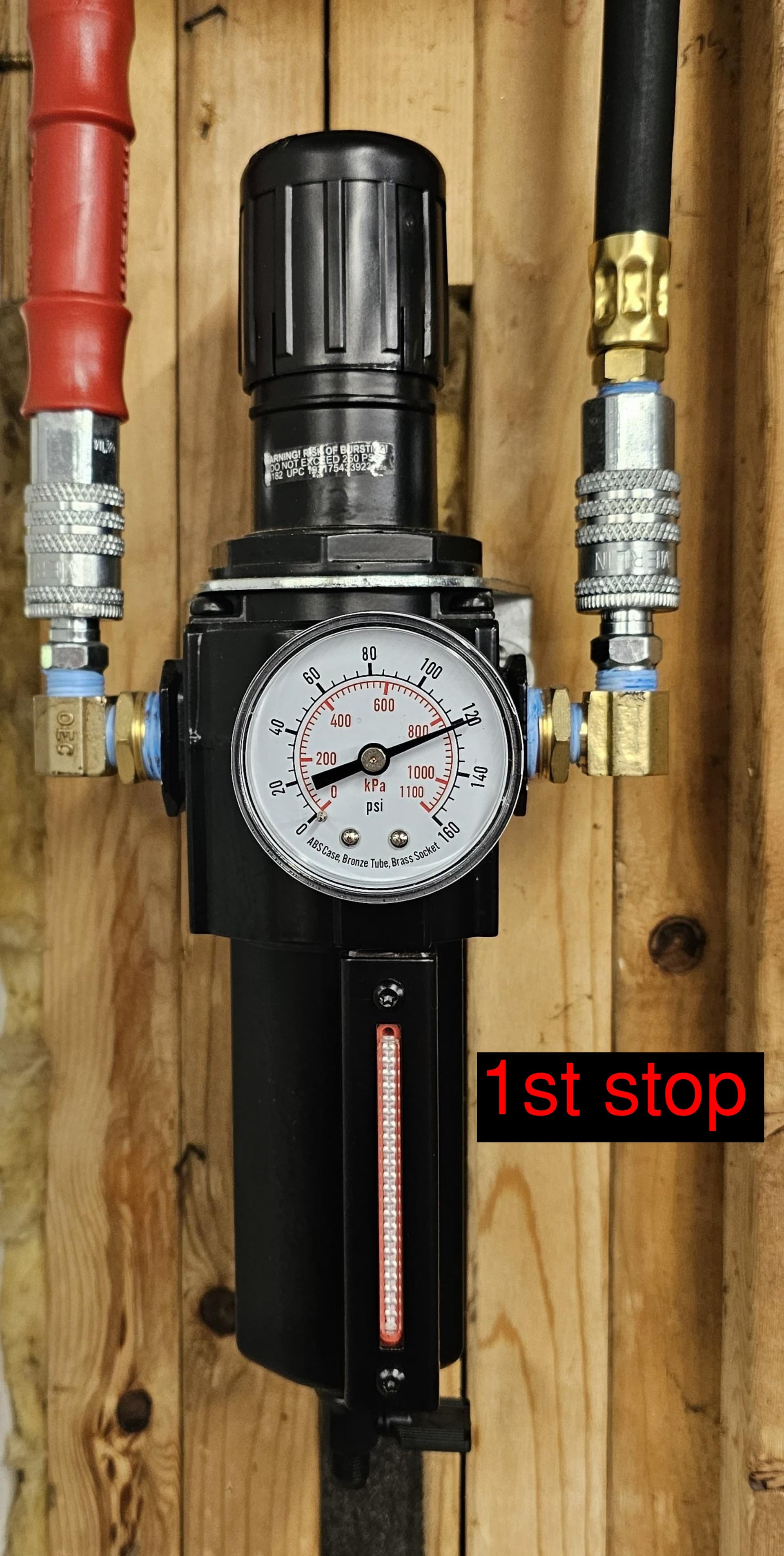
I made a post the other day asking for a critique of my cut, in that post I claimed I had dry clean air, I think that is incorrect. I was using my blowgun this morning and noticed on short blasts I saw moisture blow out of it, I drained my separator and a little came out, i went further down the line to my motor guard and pulled the filter, it was clean and dry, is it possible moisture can get past that? I’ll post pictures below of my setup and also the consumables that only have minimal use on them, is the weird marks on them a sign of moisture?
Looking at your consumables, you definitely have a moisture issue. The motorguard isn’t intended to filter moisture, it is a particulate filter. What type of climate do you live in. What you have pictured I would say is the bare minimum for someone in a dry climate.
3rd stop is the setup before the motor guard That makes sense about the motor guard, I guess I assumed took moisture out by the material it was made out of…oops I live in NH and its been raining for the past week and my garage is half under grade so its been real humid, I run a humidifier in there to control mold and keep my tools from rusting and it sits around 50% humidity. Are my only options a compressed Air Dryer?
Are you draining the compressor tank regularly? That should be at least a once or twice per day thing.
The motor guard filter material will saturate quickly with water and then needs to be replaced. No way to dry it out.
You definitely want/need to add a desiccant filter of one quart size or more depending on how much cutting you do. The motor guard filter should be after the desiccant filter to catch any particles off those plastic beads.
I am in a pretty humid area (western Washington state) and I got be reasonably well by being very diligent with draining the compressor tank. I have since added lots of drying equipment including the HF refrigerated dryer.
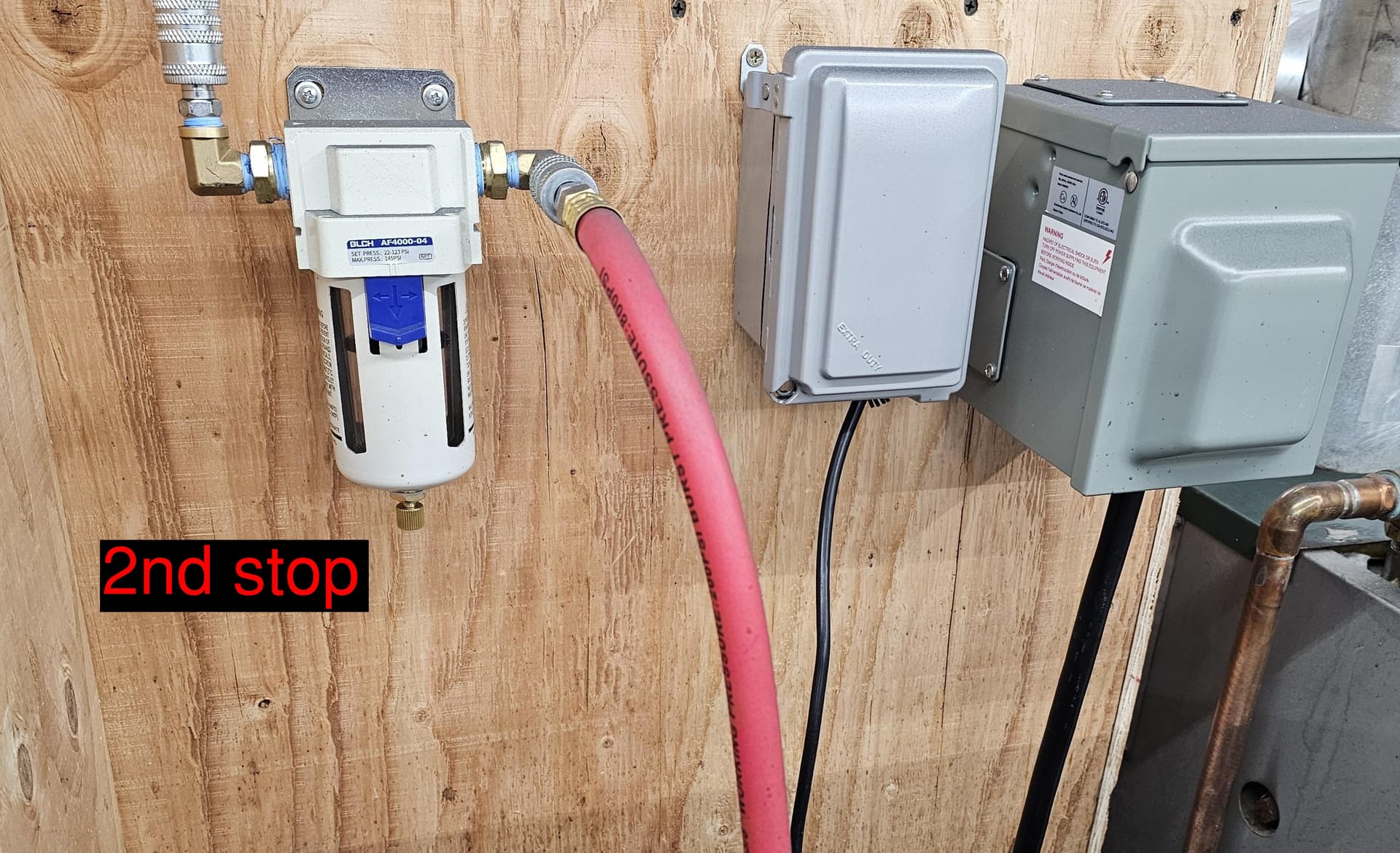
Your “2nd Stop” looks like a water trap? It will need to be a minimum of 20 feet of air line away from your compressor to even hope to grab any water out of the air. But, even at that, I have not found any of my 4 water traps to have any moisture in them.
I think in your climate that is a good idea. Make sure to note that refrigerated air dryers work better if… or even require, that you cool the air before it gets to the dryer. Most standard dryers typically can handle inlet temperatures of around 100-115 degrees F. High temp refrigerated dryers can accept air that is around 200 F. A reciprocating compressor output could be 300 to 350 F before it hits the tank. That being the case, you will need to have a length of pipe or some other method to cool the air before it gets to the refrigerated air dryer.
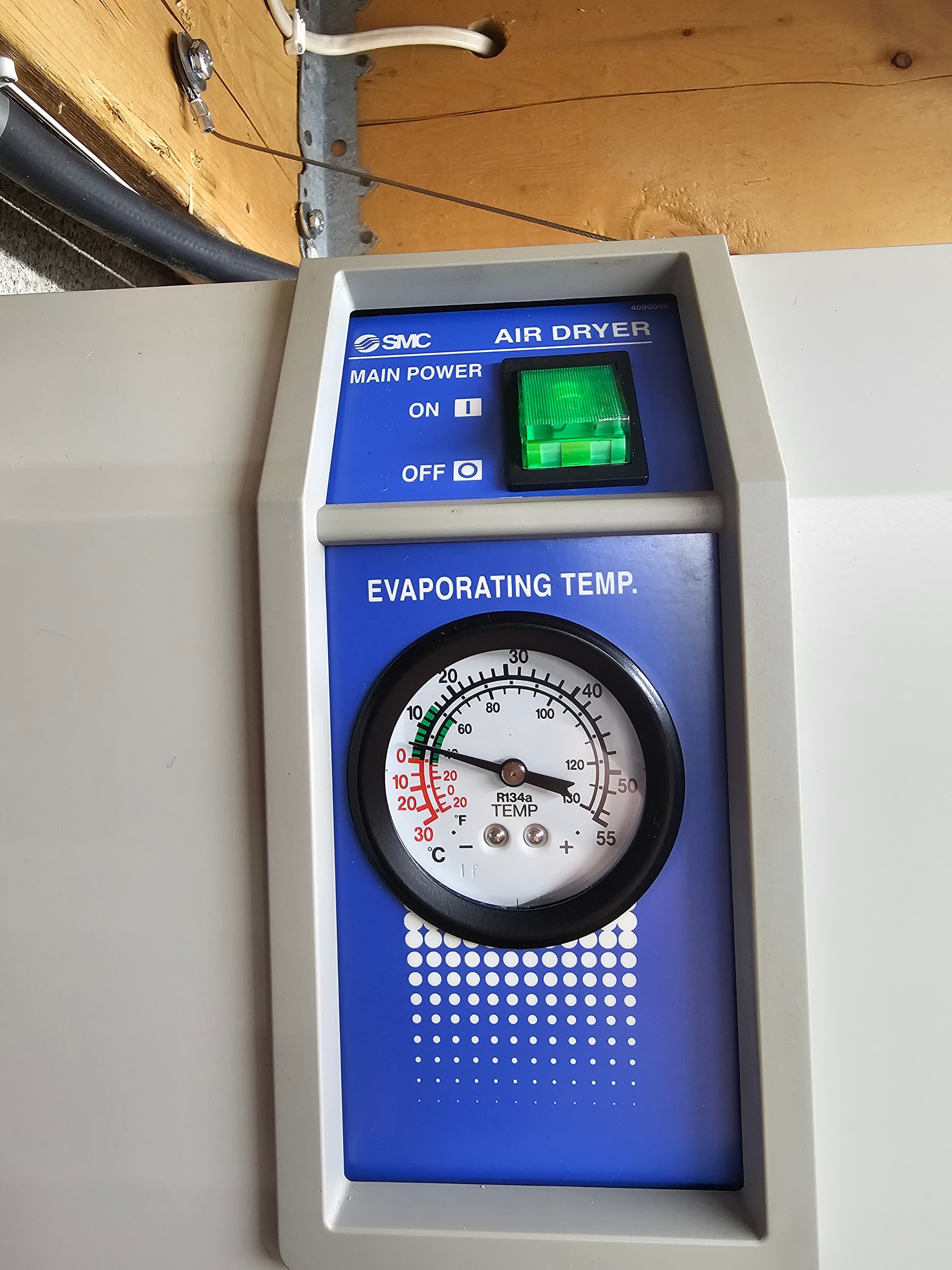
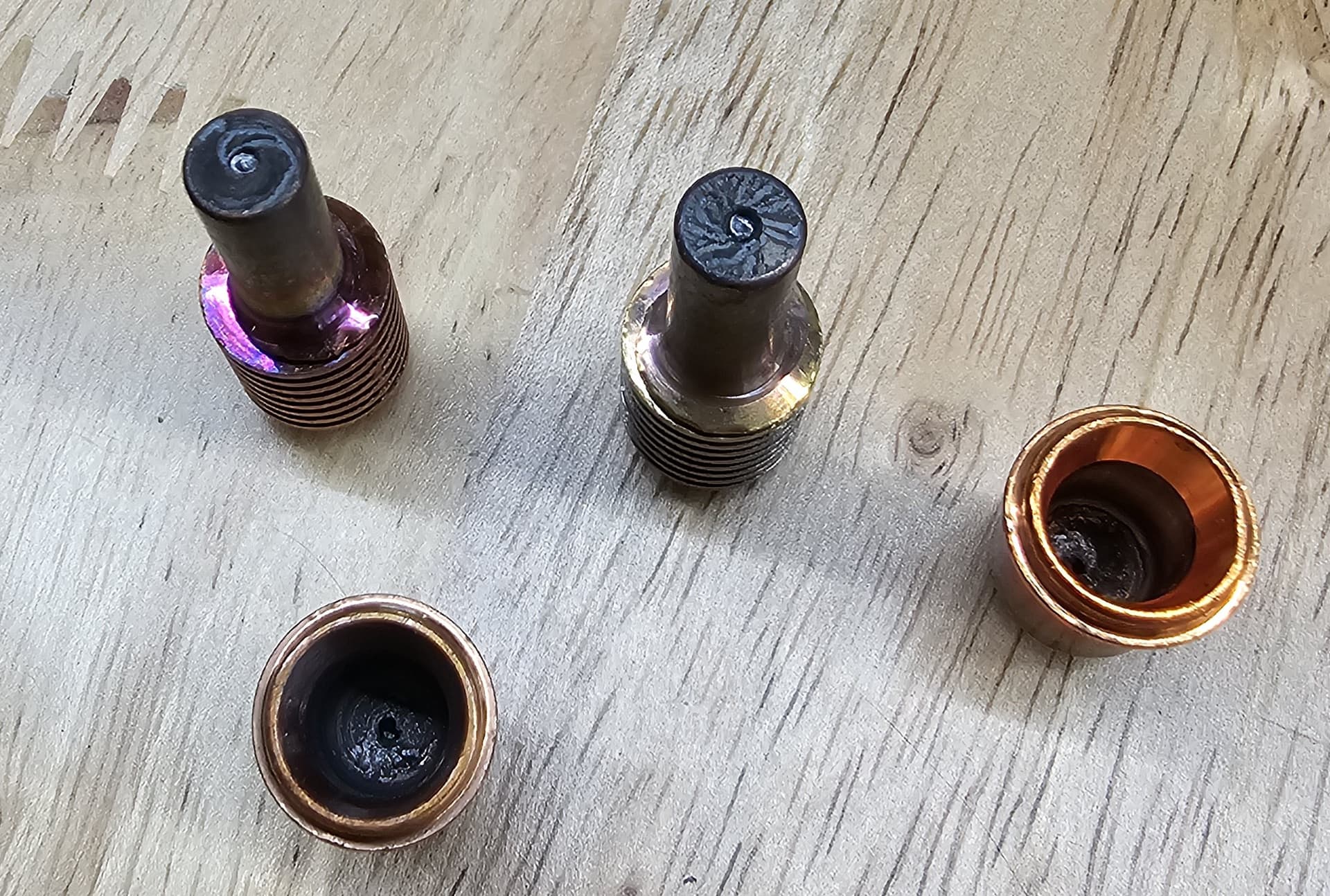
Finally got my SMC air dryer hooked up and put in a fresh set of Tecmo consumables from George and ran a bunch of test coupons to dial in cutting 14G, this is what the consumables look like after 150 pierces - am I still getting moisture?!
Thanks George for the quick service and fast answers to all my questions
Yes I run 1 quart desiccant filter, and I left original my inline water separators / coalescing filters too so I thought this was overkill at this point, ill list out below the order it is
80 gal compressor
30 ft of line
coalescing filter before SMC inlet of SMC dryer
SMC refrigerated air dryer
water separator at the exit of SMC so I could visually see condensation if it ever appeared (which it didnt which is odd?)
15 ft of air line
existing water separator
5 ft of air line
existing water separator
1 quart desiccant filter
existing water separator
Motor Guard M-60
Plasma Cutter running @ 75 psi consistently while running
It does appear to be water tracks. I have an elaborate setup like you. We have a giant Ingersoll Rand (60 cfm) screw machine with a reefer dryer 400’ from my shop. I have twin desiccant filters with a motor guard for the final. We still get a small amount of water tracking on my electrode.
I speculate that moisture is entering the air line from the torch end after cutting. Then, when the torch is activated, it lands on the electrode and is directed inside the cutting nozzle. It’s just my theory..
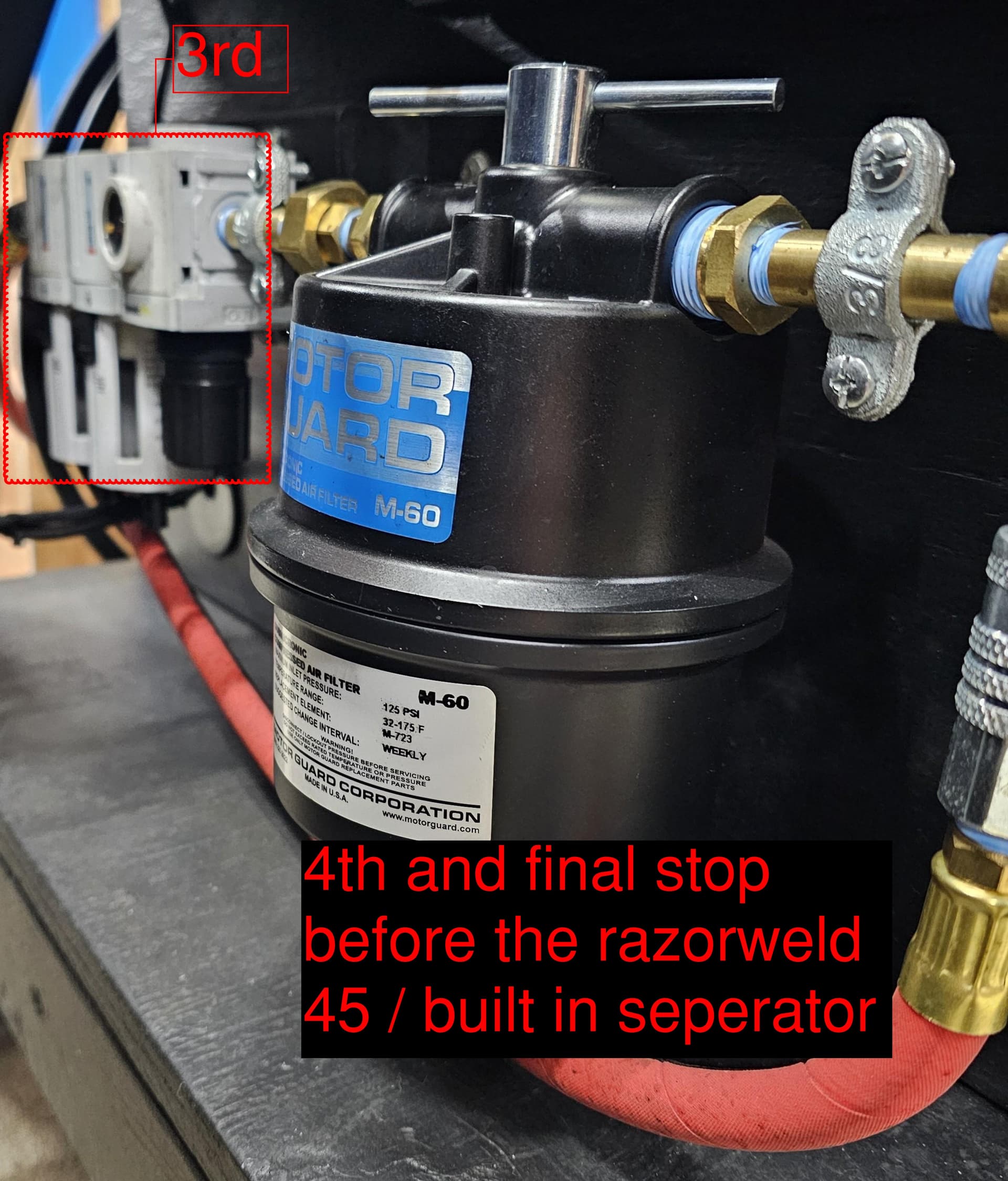

 That makes sense about the motor guard, I guess I assumed took moisture out by the material it was made out of…oops I live in NH and its been raining for the past week and my garage is half under grade so its been real humid, I run a humidifier in there to control mold and keep my tools from rusting and it sits around 50% humidity. Are my only options a compressed Air Dryer?