I do not see any specifications about air or gas requirements. Lasers require 200-300 psi compressed gas such as nitrogen or co2. Compressed shop air can be used but it must be 200+ psi and EXTREMELY clean and dry. Damage to the laser will occur unless the air is laboratory clean and dry. You are also limited to what can be cut using compressed air and the cut quality and speed suffer vs using compressed gas such as nitrogen or co2. Specifications for gas/air would be appreciated. I would hate to invest $20k and then learn I need to invest another $20k for a proper compressed air system or be stuck feeding it racks of nitrogen bottles in order to make clean, accurate cuts without destroying the laser head.
1 Like
Considering this is one of the add-ons for the laser it looks like they have that figured out.

This is covered ( with no specifics ) in the FAQs on the splash page for the Apollo
“The customer will need to provide Oxygen and Nitrogen tanks for shielding gas, or shop air suitable for the pressure and flow requirements for cutting with a fiber laser.”
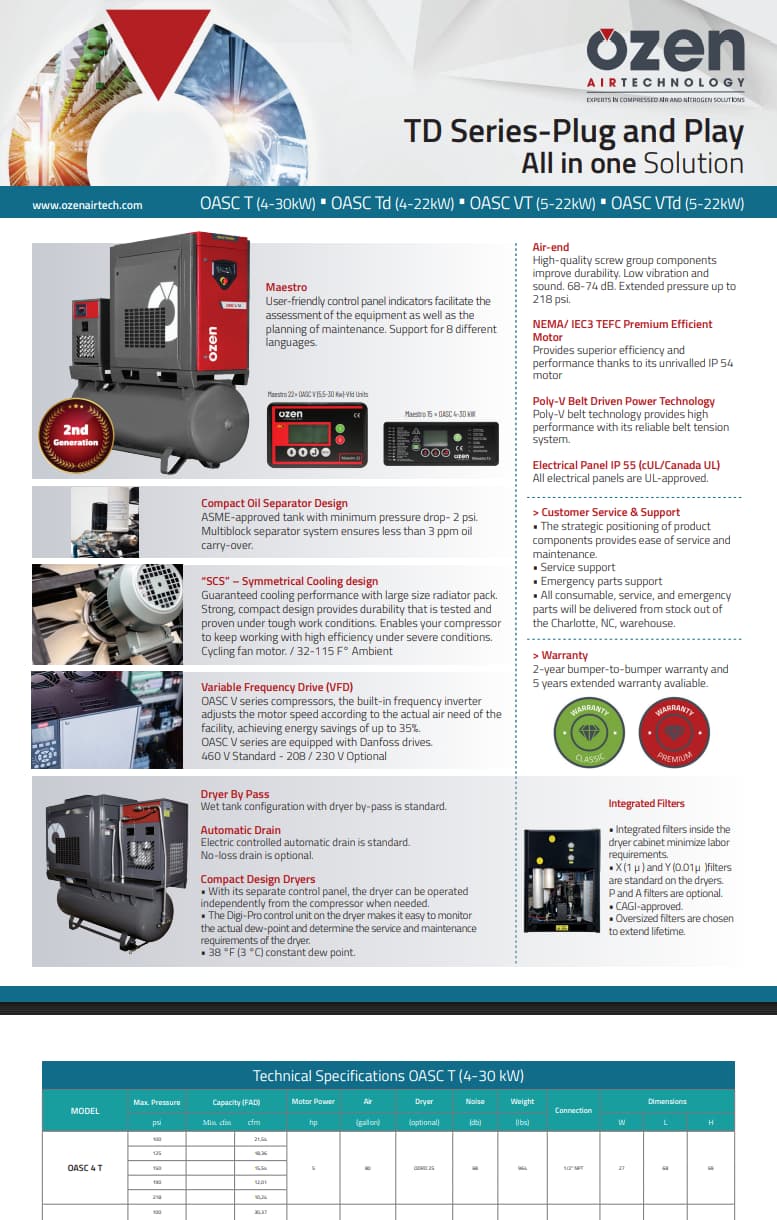
looks like another 12k for Langmuir’s recommended air system or running tanks of nitrogen and oxygen.
I believe Langmuir is using a fiber laser not a CO2 laser. CO2 lasers can cut metal but they’re far slower then a fiber laser ( for metal cutting ) and mostly used for non metal laser cutting.
2 Likes
I wasn’t aware that CO2 was being used as a shielding gas for fiber lasers, I’ll have to read up on it.
Definitely things to be aware of when buying a machine that’s worth 10s of thousands of dollars.
In the manual for the laser pictured on the Apollo this is what it lists for assist gases
“2.2.2 Assist gas interface
The impurities in cutting gas such as hydrocarbons and water vapor can damage the lens and cause
laser power fluctuation as well as inconsistencies between the sections of the work piece. The
following table is the recommended cutting gas specifications. The higher the purity of the gas, the
better the quality of the cutting section.
Impurities can be filtered out in gas supply tube, but Oxygen and water vapor can permeate light
path through non-metallic materials, which is the source of the appearance of dust and
hydrocarbons. Stainless steel fittings are recommended, at the same time customers must use
filters which can remove a minimum of 0.01micron particle to purify.
We recommend customers to use the pressure gauges with stainless steel diaphragm. Industrial
pressure gauges suck in air. Rubber diaphragm produces hydrocarbons by aging or other factors.
Cutting gas Purity Maximum content of
water vapor
Maximum content of
hydrocarbon
oxygen 99.95% <5 ppm <1 ppm
nitrogen 99.99% <5 ppm <1 ppm
argon 99.998% <5 ppm <1 ppm
helium 99.998% <5 ppm <1 ppm”
I do notice that both CO2 and compressed air are absent from this list.
1 Like
Yesterday I had a conversation with Langmuir Engineering. The air requirement is 200 psi or higher for cutting steel. Although I have a powerful air compressor, it can’t produce more than 200 psi. If I pull the trigger on an Apollo, I would be forced to use nitrogen bottles with a 300 psi regulator. That would not be a deal breaker. The size is my major obstacle.
Langmuir is using a nitrogen bottles in their testing shop.
2 Likes
The last time (last year) I ordered a 12pk of nitrogen it was approx 700$ with delivery fees and taxes etc. I wondered how long that would last, here is ChatGPT’s answer.
3. How long does your 12-pack last?
Use:
Hours of cutting ≈ 3,648 SCF ÷ (your flow in SCFH)
Some realistic examples:
-
At 650 SCFH (thin stuff, small nozzle)
→ 3,648 ÷ 650 ≈ 5.6 hours -
At ~700–1,000 SCFH (typical light/medium cutting)
→ ≈ 3.5–5 hours -
At 1,400 SCFH (heavier cutting, mid-size nozzle)
→ 3,648 ÷ 1,400 ≈ 2.6 hours -
At 2,650 SCFH (big nozzle, thick stainless, high pressure)
→ 3,648 ÷ 2,650 ≈ 1.4 hours
And that’s actual cutting time – it doesn’t count idle time with no assist gas flowing.
2 Likes
It wouldn’t take to long to make the 250 psi compressor a viable option.
1 Like
I’ve been contemplating a laser machine for a while and done some basic research as I already have a nitrogen generator. Although it is not able to generate that kind of pressure, I have read that people have used those compressed air boosters to increase pressure. It would need a tank in-between to store some volume and maybe have to increase pause time between cuts.
The same could work for a lower PSI compressor as long as you have the volume.
1 Like
I have the volume (50 cfm), and the booster and auxiliary tank would not be an issue. If the flow requirements are not crazy. I need more information at this point. My issue with the booster pump is the god awful racket they produce.
Here is one example from McMaster carr, I’m sure cheaper could be found.
It appears that what ever multiple of pressure you gain, you loose the same in flow. I think 2:1 would be ample for most people as most home depot compressors will put out 150 psi at least.
That’s half the compressor..
They can be had for a lot less, would need to check the specs of course but here is an example. Use the money saved to get a nitrogen generator. I got mine from Alibaba (4k$) and its been working great for my 3d printers. Now you have a unlimited supply of nitrogen for half the cost of the compressor.
If Langmuir wants to send me an apollo I will be the Guinea pig, I’m only an hour away from their Conroe location. 
1 Like
Given that the compressor that Langmuir recommends is 11 CFM (700 CFH)
That puts the usage of this table into the lower range..
Thin stainless or mild steel (300–400 SCFH)
3,648 ÷ 300 ≈ 12.2 hours
3,648 ÷ 400 ≈ 9.1 hours
 9–12 hours of actual cutting time.
Medium thickness (600–900 SCFH)
3,648 ÷ 600 ≈ 6.1 hours
3,648 ÷ 900 ≈ 4.0 hours
4–6 hours of cutting.
 Real-world takeaway for a 1.5 kW machine
-
If you cut thin sheet metal → a 12-pack lasts a full day or more (actual cutting hours).
-
If you cut 3 mm stainless → a 12-pack lasts 4–6 hours.
-
If you cut only occasionally → a 12-pack may last days to multiple weeks.
1 Like
I’ve got a 3Kw fiber laser. (Laguna)
Cutting 1/8” aluminum with a 2mm head, I get about 50 minutes cutting time out of a full 6 pack of N2 bottles. Cutting 3/16” (3mm head) , I get about 40 minutes. My consumption figures for inventory costing are .67 CF/Second for 3/16, and .5 Cf/Second for 1/8” aluminum. Steel is MUCH less. But aluminum will just suck it down like you’ve never seen. I ended up putting in a liquid nitrogen system to keep it fed. That added about $5K for the vaporizer tower and plumbing. So this is a bigger laser, cutting thicker stuff, but it’s worth knowing. We cut with pure N2 because we need the cleanest cuts we can get. (I also bought an MR-1 specifically to sit around all day and deburr the parts coming off the laser, so it’s that kind of uptight about the edge finish. )
Also, the LN2 tanks are about $450/ea, and they run for about 6-8 hours of cut time, depending on thickness. $150 delivery charges too, so figure $600/bottle. (Plus the money I spent to get a heavier forklift. Big LN2 tanks are right around 2200 pounds, so my little forklift wouldn’t cut it. I ended up getting a larger 5000 pound capable fork.) You start playing those games, you’re not a garage shop any more.
For whatever that’s worth.
Brian
6 Likes
Thank you, Brian. It is a bit more than I want to tackle right now. The compressor, the multiplier, or N2 bottles are a problem I must reevaluate at this time.
2 Likes
Even 5k for the vaporizing system, Liquid nitrogen is a better option than 12pck 300 lbs gas bottles.
Maybe why they kept this laser at 1.5kw, thinner material will be ok with compressed air. But still 20k for the table (launch price) 12k for a 200psi compressor (if you don’t want to mess with gas), then all the other add on’s, tax and delivery. We are getting close to 40k.
By the time you buy material, electricity, gas, laser consumables, maintenance, your time. The likes of cut send cut shows is value.
1 Like
Yeah, but even at $40K, that’s about 1/3 of what I paid for the high power Laguna, and all of the stuff needed to make it pay. (Add in $15K just to have the shop wired for it. (480V, ?30? Amp, etc.)) So $40K suddenly doesn’t look so horrible. Lasers cost. They can do some incredible stuff, but they ain’t cheap. I suspect the real reason Langmuir stayed under 1.5Kw for the Apollo is that’s the largest size you can get on standard 220V. Bigger than that, you need 480, and that is suddenly a very big hill to climb. (Ask me how I know…)
Regards,
Brian
1 Like
About $40k is what seems to be the average cost for laser at home on 220v.
My buddy with a 5’ x 10’ fiber laser and 4’ x 8’ laser with all necessary components set him back about that much.
Forgot to add he’s got a DXTech setup
1 Like
That’s a fair point, I never considered the voltage required to operate anything larger.
1 Like
Thanks for all the info guys! Makes it much easier than researching all that stuff.
1 Like